

Home/Wellness Zone/Sakra Blogs

6th Nov, 2020

The knee is one of the important joints in the body because it carries the weight of the human being but is also important for sporting activities. So in the knee, there are structures like meniscus which are the rubber pad for cushioning, ligaments which support the stability of the knee.
The most common injuries to the knee are rubber pad injury or meniscus injury, ligament injuries, cartilage injuries. Meniscus injuries are quite common because of the sporting population. Usually, when we do sports the twisting movements can cause meniscus and ligament injuries. Also slipped in the house or fall, twisting in the house can also cause meniscus injuries.
The meniscus is a C-shaped structure in the knee, there are two menisci, inner menisci called middle menisci, outer menisci called lateral meniscus. It is divided into three zones:
Outer Zone also called Red-red zone
Middle zone is called the white-red zone
The inner zone is called the white-white zone
These meniscus injuries can result in a tear of the meniscus. These tears are classified into radial, horizontal, complex, oblique, horizontal cleavage and root tears.
Meniscus root tears are the tears in which menisci are attached to both the front and back of the leg bone or the tibia bone through a structure called root. So we have inner meniscus front attachment and back attachment, other meniscus front and back attachment. The detachment of the root from the bone is called root tears.
Not all meniscal tears require surgery, some can be managed conservatively. Small peripheral tears are red-red zone tears that can be managed conservatively without surgery because the blood supply to the outer portion of the meniscus is present whereas small tears can heal by itself.
If the tears are extending from the Zone 2 to zone 1 that is the red-white zone and white-white zone then the surgery is contemplated or bigger tears in the periphery of the outer zone (red-red zone) need surgical treatment.
Removal of the meniscus - It is called a meniscectomy. It should be done when the tears are in the white-white zone and which is not repairable and also in the complex tears where the meniscus is crushed and the tissues are not good. One should be very very careful to remove as least meniscus as possible because removal of too much of meniscus ends in losing the cushioning effect of the meniscus. The thigh bone and leg bone start crushing each other and develop cartilage damage or arthritis.
Repair of the meniscus - It is called meniscus repair. There are three techniques used in meniscus repair:
Outside- in technique - Putting needles from outside and stitching the meniscus though suture materials. This is usually done for the front half of the meniscus.
Inside-out technique - It is done for the posterior half of the meniscus
All inside technique- There are very variegated uses in all inside techniques such as biodegradable material, peek material, all suture material.
These all suture devices come with disposable devices which help in delivering the implant into the meniscus and which creates a knot or suture around the meniscus which helps in repairing the meniscus.
In the last five years, at Sakra, we have performed almost 10000 meniscus repairs. If meniscal repairs are followed up well you can do MRIs and see how the meniscus is healed and at the same time if you have retained the meniscus you can allow the patient to go back to complete sports activities after 6-9 months. Post-surgery good physiotherapy and rehabilitation are required, first, we start with walking, then we do weight-bearing, then we train the patient for balance agility and sports training in future.
We are happy to introduce JuggerStitch by Zimmer Biomet, which is all inside a knotless meniscus repair device which doesn’t carry any implantable peak or biodegradable implant. It is made up of only suture material. This device has been introduced for the first time in the country by Sakra World Hospital. We are one of the premium hospitals in the country to do the meniscal repair.
The benefit of JuggerStitch by Zimmer Biomet is that it is knotless, all suture implant which allows easy implant insertion.
At Sakra, we always suggest doing meniscal repair because if you remove the meniscus then there is no other option and the meniscus cannot regrow. If too much of meniscus is removed then the only option left with is meniscus transplant where you have to get the meniscus from the cadaver labs and do the meniscal transplant. So it is better to save as much as possible.
1. What is meniscal tear repair surgery?
Meniscal tear repair surgery is a procedure used to treat a tear in the meniscus, a piece of cartilage that cushions and stabilises the knee joint. The surgery aims to repair the damaged cartilage and preserve its function whenever possible.
2. What are the common symptoms of a meniscal tear?
Common symptoms include knee pain, swelling, stiffness, difficulty bending or straightening the knee, and a catching or locking sensation. Some people may also feel that their knee is giving way while walking or moving.
3. What causes a meniscus tear in the knee?
A meniscus tear commonly occurs due to sudden twisting or turning of the knee, especially during sports or physical activity. It can also develop gradually as the cartilage weakens with age, making it more vulnerable to injury during everyday movements.
4. When is surgery required for a meniscal tear?
Surgery may be recommended when a meniscal tear causes persistent pain, knee locking, or movement difficulties despite appropriate non-surgical treatment. It may also be needed for certain tears that are likely to benefit from repair, particularly when the knee's movement is significantly affected.
5. How is meniscal tear repair surgery performed?
The surgeon examines the tear and either stitches the damaged meniscus back together or removes only the damaged portion if repair is not possible. The choice depends on the tear's location, size, pattern, and the condition of the cartilage.
6. Is meniscal tear repair surgery performed using arthroscopy?
Yes, meniscal tear repair is usually performed using knee arthroscopy, a minimally invasive procedure. The surgeon inserts a small camera and specialised instruments through small incisions to examine and treat the damaged meniscus.
7. How long does it take to recover from meniscal tear repair surgery?
Recovery after meniscus repair generally takes around 3 to 6 months, although some patients may need longer to return to sports or strenuous activities. Recovery depends on the type of tear, the surgical technique, and adherence to rehabilitation and weight-bearing instructions.
8. Can a meniscal tear heal without surgery?
Yes, some meniscal tears can improve without surgery through rest, ice, activity modification, physiotherapy, and pain management. Small tears near the outer edge of the meniscus may have a better chance of healing because this area has a better blood supply, while persistent symptoms or certain types of tears may require surgery.
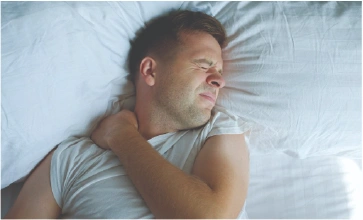
Shoulder pain often becomes more noticeable at night because the body stays in one position for a long time. Poor posture while sleeping can increase pressure on the shoulder joint and also affect the neck. Choosing the right sleeping
8 Jun 2026
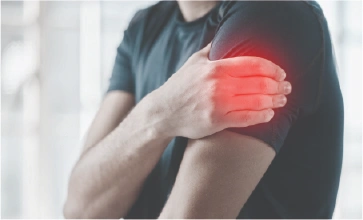
Frozen shoulder, medically known as adhesive capsulitis, is a condition that causes pain, stiffness, and gradual loss of movement in the shoulder joint. It develops slowly over time and can significantly affect daily activities such as lifting the arm,
8 Jun 2026

A dislocated shoulder happens when the upper arm bone comes out of the shoulder socket. Because the shoulder is one of the most mobile joints in the body, it is also one of the easiest to dislocate. A shoulder
11 Mar 2026

Back pain is one of the most common health issues affecting people across all age groups. It can feel like a dull ache, a sharp stab, or a persistent stiffness that limits your movement. Lower back pain is especially
13 Oct 2025
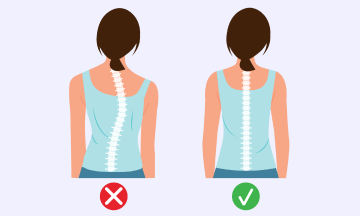
Scoliosis is a spinal condition that causes an abnormal sideways curvature of the spine. It can lead to discomfort, muscle imbalances, reduced mobility, and sometimes visible postural changes. While medical treatment and monitoring by professionals are essential, especially for moderate
19 May 2025
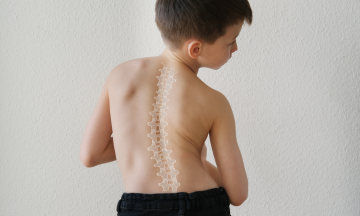
Scoliosis is a condition where the spine curves sideways, often resembling an “S” or “C” shape when viewed from behind. While mild scoliosis may not cause major problems, undiagnosed or untreated scoliosis can lead to chronic pain, posture issues, and
19 May 2025

Ligament injuries, especially to the ACL, can be debilitating, often requiring surgical intervention. While traditional reconstruction methods use autografts or allografts, synthetic ligaments are emerging as a promising alternative. These advanced materials offer new possibilities for faster recovery and long-term
19 Feb 2025

Knee replacement surgery has come a long way over the past few decades, with advancements in technology significantly improving patient outcomes. One of the most groundbreaking innovations in recent years is the use of active robotics in knee replacement procedures.
17 Feb 2025

Knee ligament injuries are common among athletes and active individuals. The knee has four major ligaments: the anterior cruciate ligament (ACL), posterior cruciate ligament (PCL), medial collateral ligament (MCL), and lateral collateral ligament (LCL). These ligaments provide stability to the
17 Feb 2025

Maintaining good posture while working at a desk is essential for preventing neck, back, and shoulder pain. Spending hours hunched over a desk or slumping in a chair can lead to poor posture habits, which may eventually cause discomfort and
13 Nov 2024

Shoulder pain is a common issue affecting people of all ages. Our shoulders play a critical role in nearly every daily activity, from lifting objects to reaching overhead. However, due to their flexibility and frequent use, shoulders are vulnerable to
13 Nov 2024

Shoulder injuries are common in over overhead sports like Badmitton , tennis , throw ball, volley ball, jawline throw base ball and cricket and also in high impact sports like hockey foot ball , judo , karate , kungfu and
16 Sep 2024

Shoulder arthroplasty, also known as shoulder replacement surgery, is a procedure where a damaged or arthritic shoulder joint is replaced with an artificial joint made of metal and plastic components. The goal is to alleviate pain, restore mobility, and improve
16 Sep 2024

A hairline fracture, also known as a stress fracture, is a tiny crack in a bone that often results from repetitive force or overuse. Unlike acute fractures caused by sudden trauma, hairline fractures develop gradually over time, making them sometimes
23 Jul 2024

A rotator cuff is a group of muscles and tendons that attach the shoulder blade to the upper arm bone and help to stabilize the shoulder joint. A rotator cuff tear is a common injury that occurs when one or
20 Apr 2023

Shoulder replacement surgery, also known as shoulder arthroplasty, is a surgical procedure to replace the damaged parts of the shoulder joint with artificial components, typically made of metal, plastic, or ceramic. The shoulder joint is a ball-and-socket joint, where the
15 Mar 2023

Bengaluru, December 13, 2020:Sakra World Hospital is one of the leading healthcare providers in Bengaluru and India’s first FDI hospital to bring the country's one of its kind healthcare breakthrough - CUVIS Joint. It is an advanced robotic knee replacement
7 Jun 2021

Importance of the Knee Joint The knee is one of the important joints in the body because it carries the weight of the human being but is also important for sporting activities. So in the knee, there are structures like meniscus
6 Nov 2020

There are a subset of patients suffering from arthritis pain and also suffering from ligamentous meniscal injuries, who have to put the surgeries forward due to the COVID. There are a lot of people who are suffering from immense pain, they
6 Nov 2020

Question: I haven’t been injured but I have shoulder pain when I raise my arm overhead. What could it be? This is one of the most common questions I come across in my clinical practice. The most common cause of the
24 Jan 2020

Medically known as adhesive capsulitis, frozen shoulder is a condition that severely limits your motions as the tissues in the shoulder joints become thicker with time & develop scar tissue. Frozen Shoulder Symptoms: Main Signs and Symptoms of Frozen Shoulder 1. Stiffness
23 Dec 2019

Medically known as adhesive capsulitis, frozen shoulder is a condition that severely limits your motions as the tissues in the shoulder joints become thicker with time & develop scar tissue. Frozen Shoulder Symptoms: Main Signs and Symptoms of Frozen Shoulder 1. Stiffness
23 Dec 2019

Living in pain can be excessively tolling not just on a person but also those around them. It ruins the spirit of life & puts a dark cloud over you. As much as it is advised to stay fit as
23 Dec 2019

Overview of treatment options for Shoulder Impingement Also known as Subacromial Impingement Painful Arc Syndrome or Rotator Cuff Tendinitis Shoulder Impingement is one of the most common causes of shoulder pain caused due to repetitive compression or "impingement" of rotator cuff
23 Dec 2019

There are a variety of ways you can injure your rotator cuff; from a fall or accident heavy lifting or swinging motion or deterioration of the muscle & ligament from ageing. In case of a complete tear in the rotator
23 Dec 2019

If you've been around athletes, you may have heard them grumbling about a torn rotator cuff or constant shoulder pain. What does this really mean? The rotator cuff is a collection of four muscles & tendons around the shoulder joint.
23 Dec 2019

Simple activities like brushing hair or reaching for the shelf causing you severe shoulder pain? Unable to explain the pain in your shoulder? As age increases, our shoulders become more vulnerable to pain & injury. Sometimes shoulder pain is an indication
23 Dec 2019

The shoulder consists of several tendons, ligaments, & muscles making it flexible & giving it the strength to perform manoeuvres ranging from writing to lifting weights. Unfortunately, since the shoulder muscles are used regularly for all activities, shoulder pain is
23 Dec 2019

The group of muscles & tendons that surrounds the human shoulder joint & helps with the rotation of the arm is known as the rotator cuff. Most common injuries to the rotator cuff are due to repeated overhead movement of
23 Dec 2019

What is Meniscal transplant surgery? Replacing the missing or damaged meniscus with a meniscus from a cadaver donor or live amputee donor is called Meniscal transplant surgery. The surgery happens under anesthesia (General or Spinal or Epidural depending upon the patient’s
2 Jan 2019

Sakra World Hospital introduces Computer Navigated Partial Knee Replacement Surgery Only 7 Computer Navigated Partial Knee Replacement Surgeries have been performed till date in India and Sakra World Hospital is the first in South India and the only hospital other than
6 Sep 2016

Total Knee Replacement (TKR) surgery has today become a commonly performed and highly successful surgical procedure. Recent innovations have resulted in further improvement in early and long-term surgical outcomes. New implant designs provide greater and more normal range
20 Jul 2016

The shoulder is a complex ball and socket joint that is able to move in many directions. With this great mobility comes a lack of stability. This lack of stability in the shoulder makes it susceptible to injury and pain.
8 Mar 2016

Shoulder joint complex is a combination of several joints that combine with tendons and muscles to allow a wide range of motion in the arm — from scratching your back to throwing a jawline. Any problem in the shoulder joint
6 Feb 2015
Enquire Now


